Disclaimer and confidentiality notice

We accept no responsibility for the consequences of this document being relied upon by any other party, or being used for any other purpose, or containing any error or omission which is due to an error or omission in data supplied to us by other parties.

This document contains confidential information and proprietary intellectual property. It should not be shown to other parties without consent from us and from the party which commissioned it.

The climate emergency is a health emergency. Climate change is a profound public health challenge that directly impacts the wellbeing of patients and our communities. From heatwaves causing heat-related illnesses to flooding disrupting healthcare services, the consequences are far-reaching and severe.

By prioritising carbon emission reductions and integrating environmentally sustainable practices, the environmental impact of healthcare delivery can be reduced.
Read more

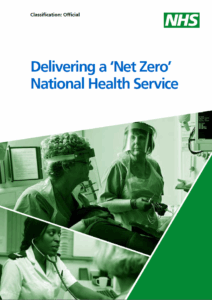
Delivering a Net Zero NHS coverIn 2020, the NHS became the world’s first health system to commit to reaching net zero emissions, publishing the Delivering a ‘Net Zero’ National Health Service report. The NHS then embedded net zero into legislation through the Health and Care Act 2022; following which the Delivering a ‘Net Zero’ NHS report is now statutory guidance.

Achieving net zero and embracing sustainability are not just ethical imperatives but practical necessities for the NHS.

It is imperative that action is taken now to mitigate these impacts and safeguard the health of future generations.

By transitioning to renewable energy sources, reducing waste, and promoting sustainable procurement, healthier environments can be created for our patients and staff. These actions will help combat climate change and enhance the resilience of our healthcare system.

NHS Green Plans

Trusts and Integrated Care Boards (ICBs) are expected to meet the climate challenge and address their duties and statutory responsibilities through the delivery of board-approved Green Plans.

Green Plans focus on the environmental aspects of the health system at an organisational level, to improve sustainable operations and increase the positive contributions to the wider populations health.

Following NHS England’s update to its Green Plan guidance in February 2025, this document is our, Bradford Teaching Hospitals NHS Foundation Trust (BTHFT), Green Plan 2025-2028, defining our programme of sustainable activity for the next three years.

With specific alignment to the guidance, we have:

  • Reviewed our progress to date and engaged with key stakeholders, in particular clinical and staff groups, who underpin green plan delivery to identify our priorities;
  • Considered the NHS national carbon emissions targets;
  • Set SMART objectives and associated actions for each Green Plan area of focus;
  • Revised governance for our Green Plan to measure and report on progress; and
  • Ensured compliance with any applicable legal duties, including the duty to reduce inequalities, the Public Sector Equality Duty and the duty to have regard to all likely wider effect of decisions.

Our strategic objectives are supported by focus area action plans outlining how we intend to reach our sustainable aspirations.

Acknowledgements

This Green Plan has been developed with the support of Mott MacDonald, who were commissioned to lead its preparation. The work instructed involved engaging stakeholders across the organisation through various interviews and workshops. Following which, the analysis of feedback contributed to this written strategy. The Green Plan is informed by a wide range of operational insights and aligned with current sustainability priorities.

Contents