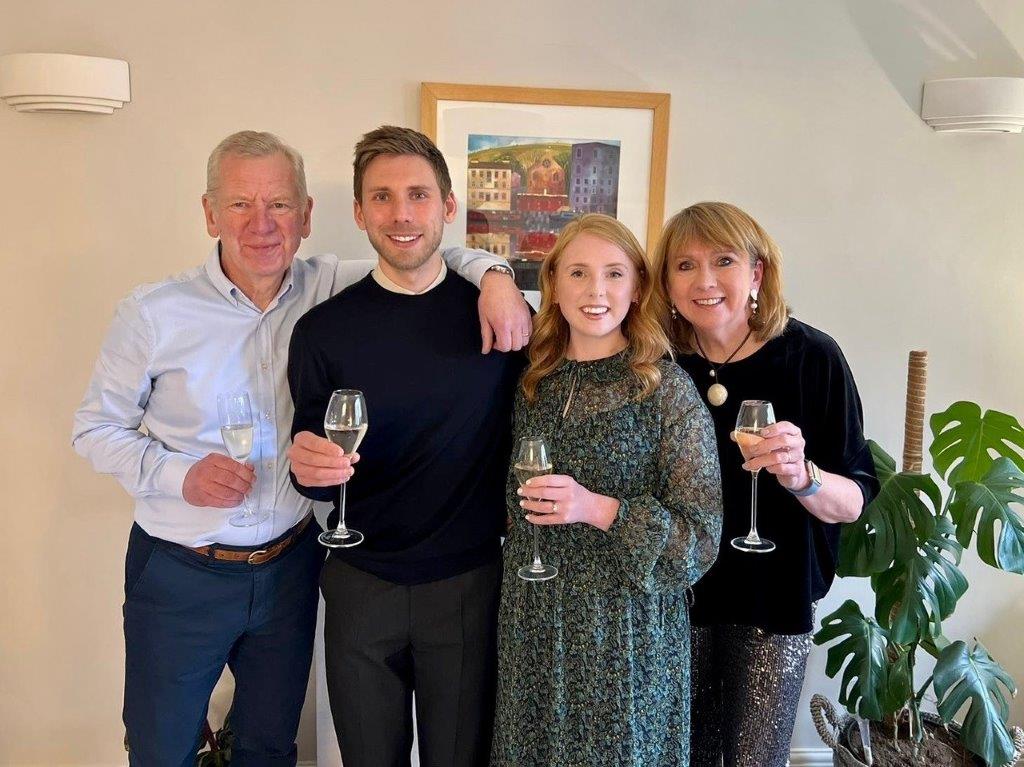
- On April 29 2016 son Lewis donated his Dad David his kidney, saving his life and allowing him to return to normal activities like holidays aboard and take up new hobbies like padel tennis.
- On April 29, 2026, David and Lewis will celebrate a major milestone – their 10th anniversary.
- Their story highlights the impact of live donors.
A father and son from West Yorkshire are celebrating the tenth anniversary of their living donor kidney transplant.
On April 29, 2016, Lewis Smith saved the life of his dad, David, by donating one of his kidneys.
For David and Lewis, their ‘kidneyversary’ is forever a day etched in their memories and one they always unite for. As they hit their first decade this Wednesday (April 29), they are celebrating in style with a family trip (including wife and mum, Debra, 62,) to Valencia in Spain.
Retired accountant, David, 66, said:
I can’t thank Lewis enough. He was absolutely brilliant and a rock. He was so determined and unwavering once he put his hand up.
Every year we get together on our ‘kidneyversary’ to celebrate our kidneys and we never forget his gift of life. The transplant has been life-saving and life-changing.
For David, who spent 20 years managing his auto-immune condition before his kidneys started to fail, a transplant was his only hope for regaining quality of life.
He explained:
I’d successfully managed my condition for two decades but things started going downhill and in 2013 I was placed on the transplant list as my kidney function started to decline.
David, from Clifton, near Brighouse, explained:
I held off on dialysis but I was starting to become really poorly as my kidneys were giving up. “From the start of my care at St Luke’s Hospital in Bradford, my renal consultants, Dr Robin Jeffrey (pre-transplant) and then Dr John Stoves (post-transplant), had been very clear that a living donor transplant was my best chance of longevity.
Rather than face having his dad living life on dialysis and the organ donor transplant list, son Lewis stepped forward in 2015 and offered to be tested to see if he could donate one of his kidneys to his father. Much to David’s hesitancy initially.
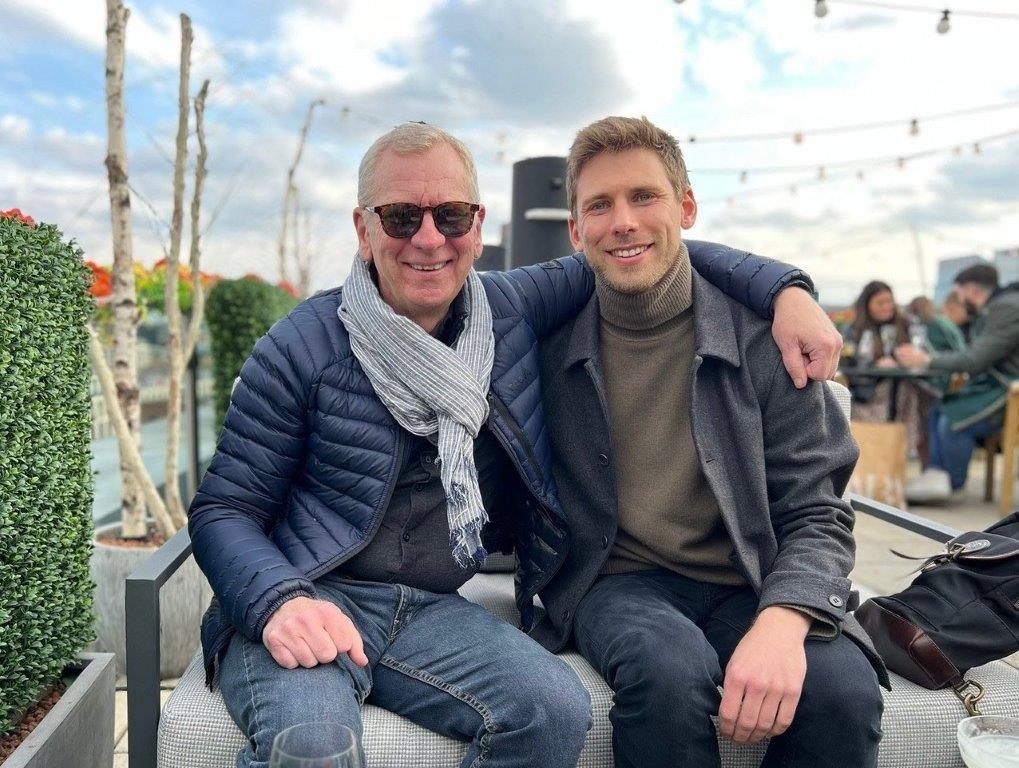
He added:
Your natural instinct as a parent is to keep your child out of harm’s way. It was something that was difficult to get my head round initially and I was reluctant to accept that I was putting my son – albeit voluntarily – under the knife for my benefit.
Lewis, now 34, said:
I’d become more aware that Dad was becoming sicker – I’ve only recently learnt he’d been placed on the transplant waiting list around 2013 – so I talked to Mum first about me volunteering to give Dad a kidney to get her onboard with the idea.
I thought the best strategy was to write Dad a letter as I suspected he might just say no straight away, without giving it proper consideration, if I suggested it in person”? I laid out the arguments pragmatically and rationally as to why it was a good idea, showing him I’d done my research. I knew that I could live a full life with just one kidney and that my quality of life wouldn’t change at all afterwards. I got a text back to say we’d talk about it at a forthcoming cricket match.
Well, we went to the match and watched it in silence. Neither of us could bring it up. We were meeting friends for tea and we said to them: ‘Can you just give us 30 minutes?’ So we talked and agreed we would proceed to assess the feasibility.
They contacted the live kidney donor team at St Luke’s Hospital in October 2015 and were put in touch with Co-ordinator, Michael Speight.
A series of medical, physical and psychological tests, ensued to check compatibility of tissue and blood to see if the pair were a match.
The family were driving to Warwick University where Lewis was graduating with a master’s degree when they got the call.
Lewis continued:
We thought it would be a long process but in January 2016, we got the call from Michael to say we were compatible – we were a match – and that the operation was scheduled for April 29. I never doubted my decision. All the conversations we had with medical professionals left me feeling like I was in safe hands. I never doubted the process. I never felt particularly nervous about it, I was more concerned if Dad might reject my organ.
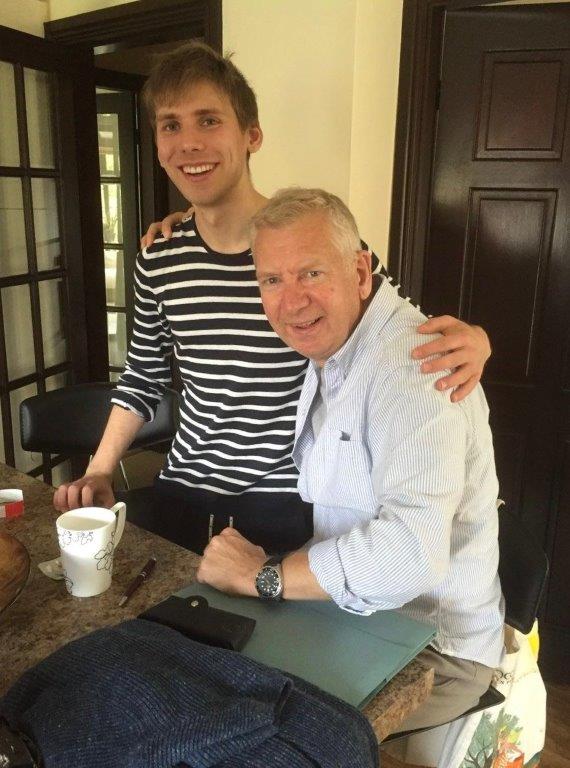
Kidney donation is life-saving and transforms the lives of people living on the transplant list or dependent on dialysis to survive. There are more than 43,000 recipients with a functioning kidney transplant living in the UK.
At the regional renal kidney transplant centre at St James’ Hospital in Leeds, a healthy kidney was taken from living donor Lewis first and transplanted into recipient David.
The pair recuperated on separate wards but Lewis was able to visit his father after their procedures. Lewis was discharged first and then David followed him home a few days after. Father and son both credit the support from Debra and daughter and sister Juliette for their recovery. Juliette also took time out from university to share in the care. It can take the recipient up to a year to fully recover.
David said:
I remember vividly coming round from the transplant operation and the consultant telling me my kidney function had gone from six, before the procedure, to 86 – I thought he was joking. It’s now been settled between 60 to 70 for the last 10 years, which is great.
While Lewis added:
It was a really, important moment when the doctors said the surgery had been a success and seeing the instant change in Dad, I just thought: ‘This is going to be all right’.
Lewis was discharged four or five days later while David followed him home a few days after.
David, who has since retired from running his own business, is monitored every three months by Dr Russell Roberts at St Luke’s Hospital’s renal unit.
He’s taken up a new sport – padel tennis which he plays two to three times a week, sometimes against younger opponents and he and wife, Debra enjoy travelling and walking. They also enjoy visiting their daughter, Juliette, 30, a teacher and her husband who live near Leicester.
Lewis has since moved to Gothenburg in Sweden where he is a Cultural Project Director at Studio Three Sixty, a theatre design consultancy that brings “spaces to life through design consultancy events”. Other than his scar which he describes as ‘staggeringly small’ Lewis says he is ‘completely well’. In the UK, Lewis, who is fit and healthy, was monitored every year but since moving to Sweden in 2019, these checks have been reduced to every two years.
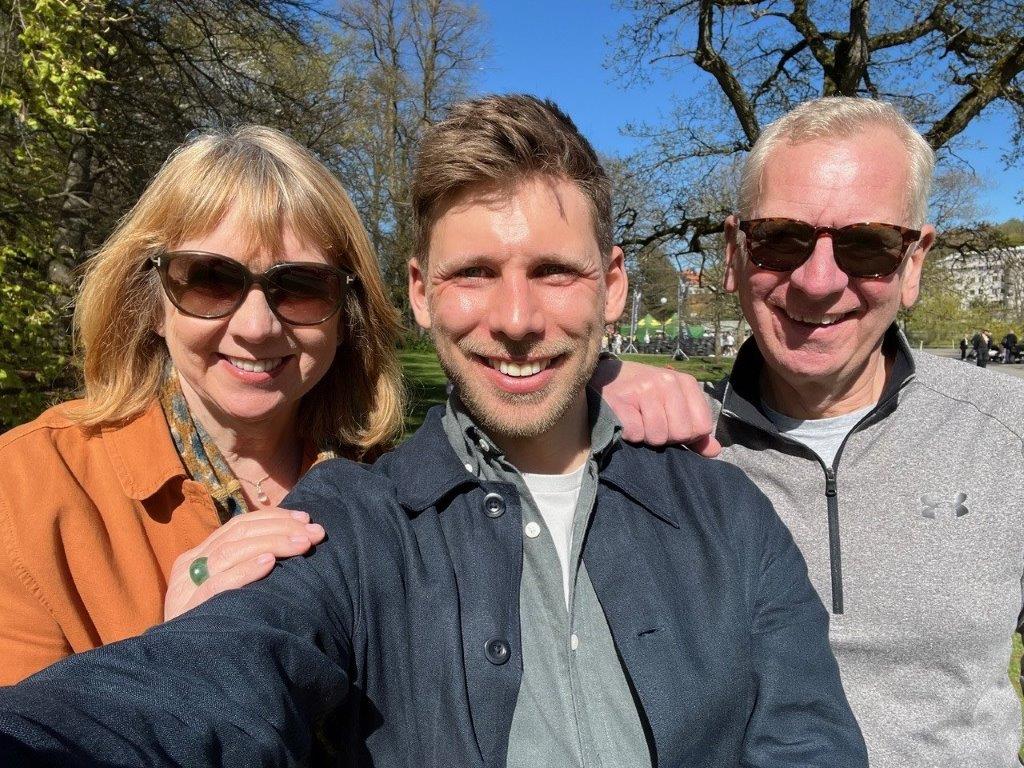
The pair are now spreading the word about how important organ donation is. Both had joined the organ donation register before the family was touched by transplantation as they considered it the ‘right thing to do’.
Lewis said:
You can’t compare Dad from before the transplant to what he’s like now. Dad was very tired all the time and it felt like there was a shadow that loomed over him, but post-transplant he has so much more energy and a new drive to travel, to go out and see the world.
Mum and Dad have done so much in the last few years thanks to the transplant. They are always on new adventures and they have a lust for life; they are always trying new things and it’s been wonderful to see them both blossoming – it’s a really wonderful thing to see. It’s a joy.
David concluded:
The outcome of a transplant for me and the wider family has been immense. I was back working after the transplant and I can now have the retirement I never dreamed I would have. I am fit and healthy and am able to help cut trees around my 93-year-old mother’s house. I’m not chained to a dialysis machine and the positive benefit it has had on the wider family can’t be underestimated.
Please consider becoming a living donor as they really do change lives for the better.
Michael reinforced David’s message adding that it was “the best treatment option” for someone on the kidney transplant waiting list.
He concluded:
Moments like David and Lewis’s landmark anniversary give me immense satisfaction, when you see what that gift became. Watching father and son come back, healthy and smiling, celebrating ten years of life they fought for together… it’s a kind of joy that reminds you exactly why this work matters.
If you want to know more about living kidney donation, visit the information site at Live kidney donors – Bradford Teaching Hospitals (bradfordhospitals.nhs.uk) or contact Michael on mobile 07507 870 483 or email: michaelspeight@nhs.net during office hours.