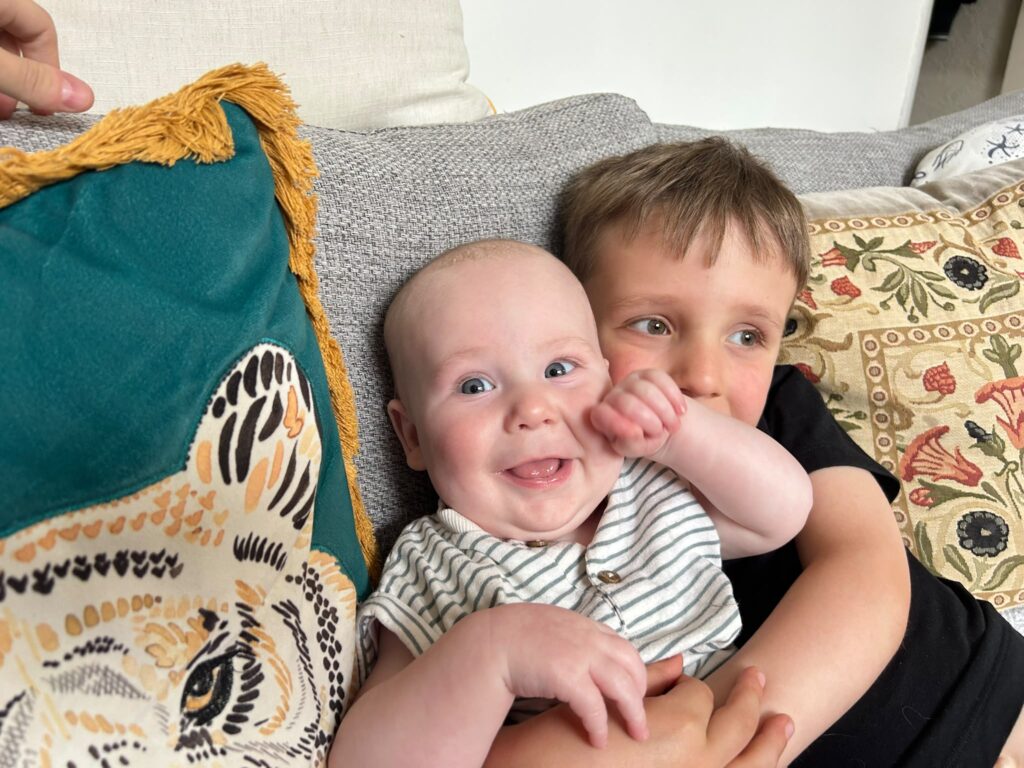
A baby whose rare genetic change was picked up by a major research study, which Bradford Teaching Hospitals NHS Foundation Trust is involved in, has helped diagnose the same change in his older brother – allowing vital early monitoring of both for a potentially life-limiting rare condition.
The Generation Study, led by Genomics England in partnership with NHS England, is using whole genome sequencing to test 100,000 newborns for more than 200 rare genetic conditions that usually appear in early childhood and for which NHS treatment or care is available.
Revan, 8 months old from West Yorkshire took part in the Generation Study and was found to have a gene change associated with adrenoleukodystrophy (ALD) when he was only a few weeks old.
ALD is a rare genetic condition, with a variety of different forms. When it presents in childhood it is progressive, causing problems with vision, movement and understanding as well as adrenal problems. It is life-limiting in most childhood cases.
Treatment of the neurological complications is only possible before symptoms arise. And it is important to treat adrenal symptoms at an early stage. Early identification of ALD enables screening for pre-symptomatic brain changes. If detected, life-saving stem cell transplant can then be offered before major symptoms develop.
While having a genetic change does not mean a child will definitely develop symptoms, early identification allows doctors to monitor children closely and intervene if needed. Subsequent biochemical testing has confirmed that Revan is at risk of developing ALD. Fortunately, this has all been picked up before he has displayed any symptoms.
Revan’s result prompted genetic testing for his older brother, Thorin, 4 years old, which found that he also carries the gene change associated with ALD.
Both children are now receiving regular blood tests, and from the age of two, MRI scans, allowing changes to be picked up early, helping doctors to spot any changes – well before symptoms would appear.
For Revan and Thorin’s parents, Jessica and Dominic, the value of taking part in the study lies in having clear information and a plan for the future.
“The only way you can possibly find out later down the line is when your child becomes ill” Jessica says, at which point in some circumstances treatment can be too late to prevent the worst symptoms.
Without taking part in the study, it is highly unlikely the children would have been tested until symptoms appeared, which could have delayed diagnosis and treatment.
“If we’d never enrolled in the study, Thorin could have potentially got ill to the point that we can’t treat him,” Jessica explains about their older child.
Knowing about the condition early has allowed the family to continue daily life with reassurance that any changes will be monitored carefully. Rather than waiting for unexplained symptoms, the family now has a clear plan in place, with ongoing monitoring and treatment options available if needed.
Professor Rich Scott, Chief Executive Officer at Genomics England, said: “We are really pleased that the Generation Study has helped Revan’s family receive an early result for both of their children. This is exactly the kind of evidence the study is designed to build, showing how whole genome sequencing at birth could support earlier diagnosis, earlier care and better understanding of rare genetic conditions.
“Every family who takes part is helping us learn how genomics could be used safely, responsibly and effectively in the NHS in the future.”
James Frith, Health Innovation Minister, said: “I am relieved for Revan, Thorin and their parents that the gene for ALD was picked up early thanks to this study, and that care has now been put in place. I am grateful to the scientists who have led this work in the UK, and reinforced the potential of genomic medicine to catch serious conditions at the earliest possible opportunity.
“This government is determined to give parents and children all the support we can in the crucial early years, and that includes using cutting-edge genomic science to help identify all the support they will need.”
Professor Dame Sue Hill, Chief Scientific Officer and Senior Responsible Officer for Genomics, NHS England, said: “Revan and Thorin’s story shows the potential of the Generation Study – not only identifying a genetic change in a newborn, but prompting testing that gave his older brother answers too.
“By bringing genomic research and routine NHS care together, we can help families get answers sooner while building the evidence for how genomics could improve newborn care in the future.
“My thanks go to the NHS staff, researchers and families making this study possible.”
Dr Catriona Firth, consultant neonatologist at Bradford Teaching Hospitals NHS Foundation Trust, said: “Early detection has given Revan and his family the best possible start. Identifying this genetic change meant we were able to refer to the specialists in this rare condition straight away. Through discussion with the experts the family have been made aware of the implications of the test result.
“Signs and symptoms of ALD are non-specific, so the disorder usually takes time to diagnose even after concerns arise. The Generation Study test result means both boys can be monitored, so if there are signs of change, treatment can be started straight away.”
Jenny Butler, research midwife and Principal Investigator of the Generation Study at Bradford Teaching Hospitals NHS Foundation Trust, said: “As a research midwife and the PI of the Generation study in Bradford, I’m always grateful when parents like Jessica and Dominic choose to take part. Their experience shows how easy the process can be, yet how profoundly it can shape a child’s future and as in this case that of the whole family. A simple test led to early answers, timely monitoring, and real reassurance. Their story highlights why this study matters so much for families and for the future of newborn care.”
The case comes as the Generation Study continues to make progress. More than 85,000 participants have been recruited to date, with over 64,000 results returned to participants.
The study is recruiting participants in more than 70 different hospitals across England and uses blood samples taken shortly after birth, typically from the umbilical cord, to provide whole genome sequencing – a technique used to read all of someone’s DNA to understand their genetic makeup.
While the whole genome is sequenced, the study is only looking for changes in genes that are expected to cause a defined list of more than 200 rare conditions.
The voluntary study, which launched in 2024 and will run until 2027, has already returned more than 200 condition-suspected results – allowing babies to receive vital care or treatment at an earlier stage.
Where a condition is suspected, it is returned to NHS specialist teams for confirmatory testing, further assessment and clinical follow-up. More than 99% of babies in the study are expected to receive a “no condition suspected” result.
The NHS blood spot screen (the heel prick test) is used to detect ten rare but serious health conditions in newborn babies. The Generation Study is not intended to replace this important testing which is recommended for all babies.
Completing the Generation Study is a key part of England’s 10 Year Health Plan. The findings will help inform the Government’s long-term ambition to offer genomic sequencing to all newborns as part of routine care – making it possible to detect and treat serious conditions early in life. This ambition will be subject to the important evidence and data the Generation Study gathers.