
Green spaces can be an important asset to healthcare facilities, both from a biodiversity and nature perspective.

Green spaces provide places for patients and staff to come for fresh air and rest, and there is a growing body of evidence linking biophilic design considerations to improvements in health outcomes (source: Mental Health Foundation (2021), How connecting with nature benefits our mental health).

We currently have wildflower gardens at BRI (shown below) and St Luke’s; however the ambition of this Green Plan is to help identify opportunities and programmes to develop additional spaces that patients and staff can use, that also enhance the biodiversity on site.
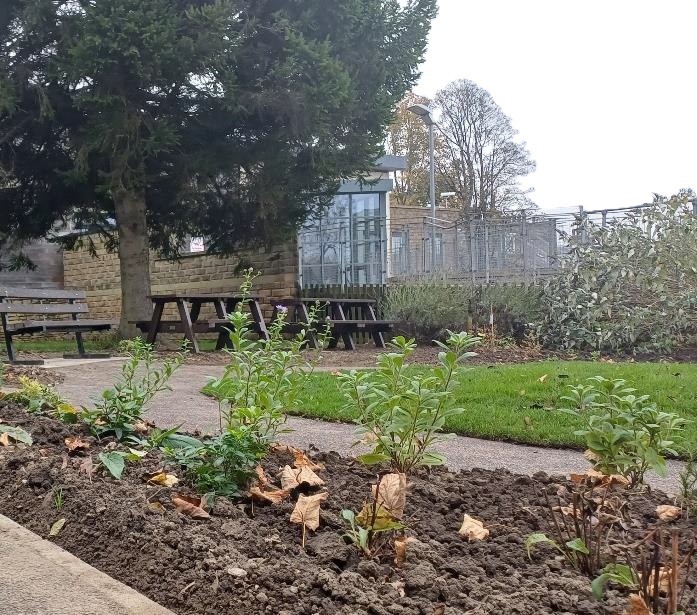
garden bed with wild flowers, lawn and a tree

Our biodiversity and green spaces objective is to:

Continue to maintain and improve our current green space, looking to identify opportunities for new spaces and enhance biodiversity on site.

Where we are

  • We have two wildflower gardens at BRI and St Luke’s and practice “No Mow May” each year

Where we want to be

  • Continue to improve and maintain our greenspaces
  • Identify and develop any spaces that could be turned into greener spaces or with more natural light e.g. yards behind Unwin Place
  • Identify opportunities to extend the “No Mow May” and other initiatives currently on site
  • Establishment of green roofs on new builds / existing buildings

Actions

We have identified the following actions to enable achievement of our objective:
Action Trust lead Delivery date
Protect and enhance our green spaces and biodiversity (e.g., Wild Gardens at both BRI & SLH) by ensuring they are not built on or disturbed Head of Sustainability 2028
Ensure any new buildings or projects have dedicated green spaces (e.g., green roofs/walls) included and that, where possible, biophilic design principles are weaved into their design Head of Sustainability 2028
Explore rainwater harvesting for use on our Wild Gardens Head of Sustainability End of 2026

← Back to Our areas of focus