
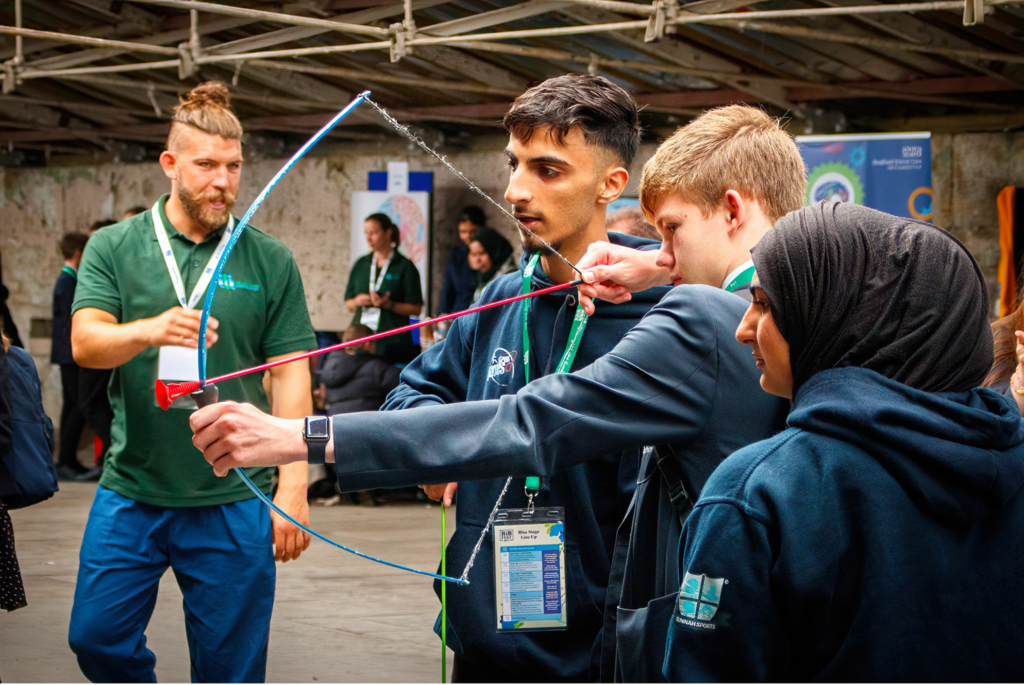
A study of over 9,000 teenagers in Bradford has revealed remarkably high levels of cultural engagement among young people in one of Britain’s most diverse cities, providing crucial baseline evidence as Bradford has celebrated its year as UK City of Culture 2025.
The Born in Bradford Age of Wonder study – the UK’s largest and most comprehensive research into adolescent life – found that 90% of Bradford teenagers attended a cultural event in the past month, with 86% actively participating in artistic or cultural activities from digital content creation to live performance. Girls showed higher engagement with visual arts, theatre, and performances, while boys demonstrated greater engagement with sport and video gaming.
“Cultural engagement is a health behaviour related to diverse mental and physical health outcomes. However, there are well‑known inequalities in access to cultural activities,” said Prof Daisy Fancourt, a co‑author of the study from University College London.
“This analysis provides important data on cultural engagement patterns among young people in Bradford and the value they report gaining from these activities.”
The research paper reveals fascinating differences in how young people from different backgrounds engage with culture. While Pakistani heritage teenagers (who make up 40% of the cohort) showed higher participation in religious services (75 %) and community volunteering (38%), white British teenagers were more likely to attend theatre performances (32%) and live music concerts (25%).
“Dancing is like therapy. It gets all my problems out my head. Just makes me feel really happy,” said a 13-year-old female participant, capturing the wellbeing benefits that cultural engagement brings to young people’s lives.
The study also found that 60% of Bradford’s young people are proud to live in their local area – with pride levels highest in the city centre and among Pakistani heritage participants. Talking to young participants revealed that this pride stems from a strong sense of community, belonging, and shared cultural heritage.
Young people’s pride in their area is strongly connected to factors like safe public spaces, familiar surroundings, and strong community ties – elements that depend on sustained investment and policy support.
A 13-year-old female participant shared: “It’s a really nice neighbourhood. We spend a lot of time in the street; we’ve got really nice neighbours. it’s a really nice sort of community atmosphere. I mean, a lot of the time we’ll just be spending time walking round on the street, seeing people across the road.”
While these findings reveal strong foundations of cultural engagement, the research also highlights the critical importance of ensuring continued access to arts, culture, and community events for all young people – regardless of background, socio-economic status, or where they live.
“Bradford 2025 is a huge celebration of who we are: one of the most diverse and most dynamic places in the UK,” said Professor Rosie McEachan, Director of Born in Bradford.
“This research shows that our young people are already culturally engaged in remarkable ways and are full of pride in our city. We now need to build on these strong foundations and ensure every teenager in Bradford can access and enjoy the breadth of cultural experiences on offer.”
This study is published as a preprint and currently undergoing peer review on the open research platform Wellcome Open Research, and is part of the Born in Bradford Age of Wonder, a seven-year project tracking the lives of all secondary school students in Bradford across 20 different life dimensions – from mental health and nutrition to gaming, the environment and AI use.