Finding out that you, or someone you care for, has bowel cancer can be worrying. The Bowel Cancer Team are here to support and help you at every stage.
We are available to:

  • Talk things through with you
  • Answer your questions
  • Provide information that is easy to understand
  • Help you to make decisions
  • Direct you to local support that is right for you

Meet the team

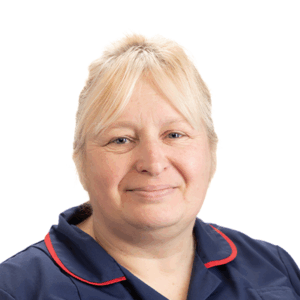
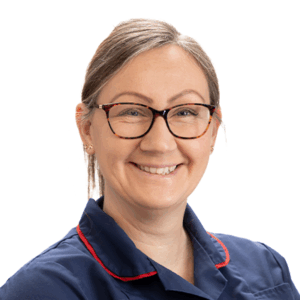
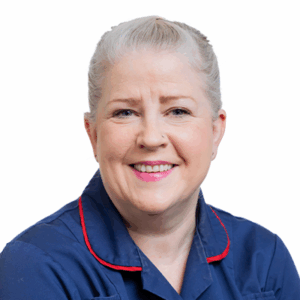
Frances Mosley
Consultant Surgeon and Colorectal MDT lead

Donna Kellett
Lead Colorectal Cancer Nurse

Linda Jones
Colorectal and Stoma Care Nurse

Sophie Stephenson
Colorectal and Stoma Care Nurse

Anne-Marie O’Leary
Stoma Care Nurse

Rob De-Crescenzo - Cancer Care Coordinator

Rob De-Crescenzo
Cancer Care Coordinator

You can contact the Bowel Cancer Nursing Team on 01274 365554 (Mon–Fri, 08:30 – 16:30).
Outside these hours, please leave a message with your name and contact details and your call will be returned.

Surgical team

  • Frances Mosley – Colorectal Cancer Lead and Surgeon
  • Mark Steward – Colorectal Cancer Surgeon
  • Sonia Lockwood – Colorectal Cancer Surgeon
  • Karen Maude – Colorectal Cancer Surgeon
  • Tabitha Gana – Colorectal Cancer Surgeon
  • Peter Webster – Colorectal Cancer Surgeon
  • Henry Watson – Colorectal Cancer Surgeon

Colorectal secretaries

  • Mr Steward – Jo Hellawell – 01274 272046
  • Mr Webster and Miss Gana – Shelley Barrett – 01274 276819
  • Miss Lockwood and Miss Mosley – Gail Conlon – 01274 274687
  • Miss Maude and Mr Watson – Victoria Horsfall – 01274 273122

Telephone Monday to Friday, 8.30am to 4.30pm.
If you call outside these times, please leave a message with your name and contact details. We will return your call.

What is the bowel?

The bowel is a long, tube-like structure that makes up the lower part of your digestive system. It has two main parts: the small bowel (small intestine) and the large bowel, which includes the colon and rectum.

The small bowel absorbs nutrients and vitamins from food into the bloodstream. The large bowel removes water from waste, turning it into stool (poo). The stool passes into the rectum, where it is stored until you go to the toilet.

What is bowel cancer?

Bowel cancer (also called colorectal cancer) usually develops on the inside lining of the bowel. It can be in the large bowel (colon cancer) or rectum (rectal cancer). Bowel cancer is also known as adenocarcinoma due to the type of cell that the cancer starts in.

As bowel cancer develops, it can grow through the three layers of the bowel wall and spread to nearby lymph nodes or other organs such as the liver and lungs. This is why doctors use staging tests (such as scans) to understand how advanced the cancer is and plan the right treatment.

For more information on staging: Cancer staging and grading Macmillan Cancer Support

Symptoms

See your GP if you notice:

  • bleeding from the back passage or blood in the stool
  • a sudden change in your normal bowel habit (more or less frequent)
  • unexplained weight loss
  • sudden tummy (abdominal) pain
  • unexplained tiredness

If you have these symptoms, please see your GP. You may be asked to do a FIT test (faecal immunochemical test) at home. This checks for hidden blood in poo, which can be a sign of bowel cancer.

Emergency symptoms

Seek urgent help if you notice: bowel obstruction/blockage (little or no poo/wind being passed, tummy pain, swelling, nausea)

A bowel obstruction can be caused by cancer growing and partly or fully blocking the bowel passageway. If not treated bowel obstruction may lead to more serious problems including perforation (tear or rupture) of the bowel.

If you experience these symptoms, please go to the Emergency Department or contact your emergency GP urgently.

Bowel cancer screening

The national bowel screening programme helps find cancers at an early stage. It is better to find cancer early as it can often be treated more easily. Every 2 years, people aged 50 to 74 are sent a FIT (faecal immunochemical test) kit by post. The kit checks for signs of blood in a sample of poo. If positive, you’ll be invited for a colonoscopy. If negative, you’ll be sent another test in 2 years.

Even if you’ve had a negative test, see your GP if you notice symptoms between screenings.
For further information on the Bowel Screening programme and having a colonoscopy please see;

Healthy lifestyle and reducing your risk

We do not know exactly what causes bowel cancer, but certain lifestyle factors can increase risk. You can lower your risk by making healthy changes:

  • Stop or cut down smoking
  • Reduce alcohol
  • Eat more fibre – fruit, vegetables, wholegrains
  • Be more physically active
  • Maintain a healthy weight

Support is available to help you make changes. See:

Living Well Stop Smoking Service – Living Well Bradford

NHS Better Health – Drink less

NHS 5 a Day guidance

Macmillan – Healthy Eating and Cancer

Family history and inherited conditions (FAP & Lynch Syndrome)

Having a close relative (parent, brother, sister, or child) who has had bowel cancer can increase your risk. The risk is higher if your relative was under the age of 45 when diagnosed. If you are worried about your family history, speak to your GP. They may refer you to a genetics clinic.

Learn more about inherited conditions.

Bowel polyps

Bowel polyps are small growths on the lining of the bowel. Most polyps are harmless, but some types (called adenomas) can develop into cancer over time. Not all bowel polyps develop into cancer, but if they are found, they are generally removed and checked under a microscope.

Polyps can be removed whilst you are having a Colonoscopy, however this depends on the size of the polyp. Sometimes, a repeat colonoscopy is needed to remove larger polyps using a procedure called Endoscopic Mucosal Resection (EMR) or Endoscopic Submucosal Dissection (ESD). Your medical team will discuss this with you. Having a colonoscopy and polyp removal can be uncomfortable but not painful.

Please see the links below for more information on Colonoscopy and Endoscopic Mucosal Resection

BTHFT – Colonoscopy – Endoscopy Unit patient information booklet

Macmillan – Having a Colonoscopy Easy Read booklet

Referral to hospital – STT pathway video

If your GP thinks you may have bowel cancer, you will be referred on a ‘2 week wait’ pathway. This means you should be seen within 2 weeks for tests. Sometimes you may go ‘Straight to Test’ without seeing a doctor first, which speeds up the process.

Diagnostic tests

If your GP is concerned, you may be referred for tests to check your bowel. These tests help the healthcare team understand if you have bowel cancer and plan the best treatment.

This video explains the process of having one of the most common diagnostic tests, a colonoscopy, at Bradford Teaching Hospitals.

Endoscopy

An endoscopy uses a thin flexible camera to look inside your bowel. Types include:

  • Colonoscopy – looks at the whole large bowel
  • Sigmoidoscopy – looks at the rectum and last part of the colon

Polyps can often be removed during these tests.

BTHFT – Colonoscopy – Endoscopy Unit patient information booklet

Macmillan – Having a Colonoscopy Easy Read booklet

Biopsy

A biopsy is when a small tissue sample is taken to check for cancer cells under a microscope.

Macmillan – Having a biopsy (Easy Read)

Scans

Scans take pictures of the inside of your body to help doctors see if cancer has spread. These may include:

  • CT scan (a series of x-rays)
  • MRI scan (uses magnets and radio waves)
  • PET-CT scan (shows how active cancer cells are)

Cancer Research UK – What it’s like to have a CT scan (video)
Macmillan – Having an MRI scan (Easy Read)
Cancer Research UK – What it’s like to have a PET scan (video)

Blood tests

Blood tests can check your general health and look for signs of bowel cancer. These may include:

  • Full blood count (to check for anaemia)
  • Kidney and liver function tests
  • Tumour marker (CEA – Carcinoembryonic Antigen), used to monitor bowel cancer.

Treatments

Treatment depends on the type of bowel cancer, how advanced it is, and your general health.

Options include:

  • surgery – to remove the cancer
  • chemotherapy – to destroy cancer cells
  • radiotherapy – sometimes used for rectal cancers

These treatments may be given on their own or as a combination.

Find out more about bowel cancer treatments.

Care after treatment & Additional Support

You will be followed up for 5 years after treatment. You will receive an End of Treatment Summary and regular checks (blood tests, scans, colonoscopies). If cancer comes back, the aim is to find it early so it can be treated. If you have concerns or new symptoms between appointments, please contact the Bowel Cancer Nursing Team on 01274 365554. Telephone Mon–Fri, 08:30 – 16:30. Outside these hours, please leave a message with your name and contact details and your call will be returned.

Additional Support