
Our commitment to providing healthy food and drink to meet the nutrition and hydration needs of all
Food and Drink Strategy 2024 – 2029
Welcome to our Food and Drink Strategy which outlines our ambitions to provide high quality nutrition and hydration to our patients, staff and visitors.
We know that remaining hydrated and eating a balanced diet are important to promote both physical and mental wellbeing. This strategy sets out how we will achieve this.
This strategy is key in our desire to continuously strive for excellence and high-quality care. It underpins how our Trust values food and drink as importantly as taking your medications or continuing with therapy.
Malnutrition and dehydration are significant risks. By supporting patients to achieve a nutritional intake appropriate for their individual needs, is vital for optimised clinical outcomes and good patient experience.
The strategy is not just about our patients; providing nutritious and balanced choices to our visitors, carers and staff is important too.
We recognise that delivering high quality nutritional care and food services involves a wide range of staff and services across our Trust, all working together to achieve our aims.
As a major purchaser and provider of food and catering services, we also have a responsibility and an opportunity to deliver our food services in a sustainable and responsible way.
Our strategy will be led and monitored by our multidisciplinary Nutrition Steering Group who have a strong focus on providing our patients with the nutrition and hydration care they deserve.

Karen Dawber
Chief Nurse
Introduction
The Trust has a responsibility to provide the highest level of care for patients, visitors and staff. This includes the quality, nutritional value and sustainable aspects of the food and drink that is served, as well as the overall experience and environment in which they are consumed.
Our vision statement, ‘To be an outstanding provider of healthcare, research and education and a great place to work’ underpins our Food and Drink Strategy for the next five years.
Our Food and Drink Strategy has been developed by the Trust’s multi-disciplinary Nutrition Steering Group and aims to:
- Meet the nutrition and hydration needs of all patients to support a good experience of care.
- Identify and treat malnutrition by routinely screening patients on admission.
- Ensure food and drinks offered meet the cultural and religious needs of our local population.
- Meet the nutritional requirements of patients who have modified food and drink requirements, as recommended by the Trust’s Speech and Language Team.
- Encourage healthier eating for the whole hospital community including visitors and staff by improving access to healthy food and drink.
- Procure sustainable food and catering services.
The strategy aims to build on work already undertaken by the Trust and should be implemented in conjunction with other initiatives and policies. These include the Trust Vision, Objectives and Values, the Trust Corporate Strategy and the Patient Experience and Engagement Strategy.
Developing our Strategy
Our Food and Drink Strategy identifies how the Trust will embed the key requirements of the National Standards for Healthcare Food and Drink, published in November 2022.
These standards build on the previous Hospital Food Standards Panel Report (2014) and consider the extensive recommendations in the Independent Review of Hospital Food (2020). The national standards for healthcare food and drink cover four key elements:
- All healthcare food and drink
- Patient food and drink
- Retail, staff and visitor food and drink
- Sustainable procurement and food waste
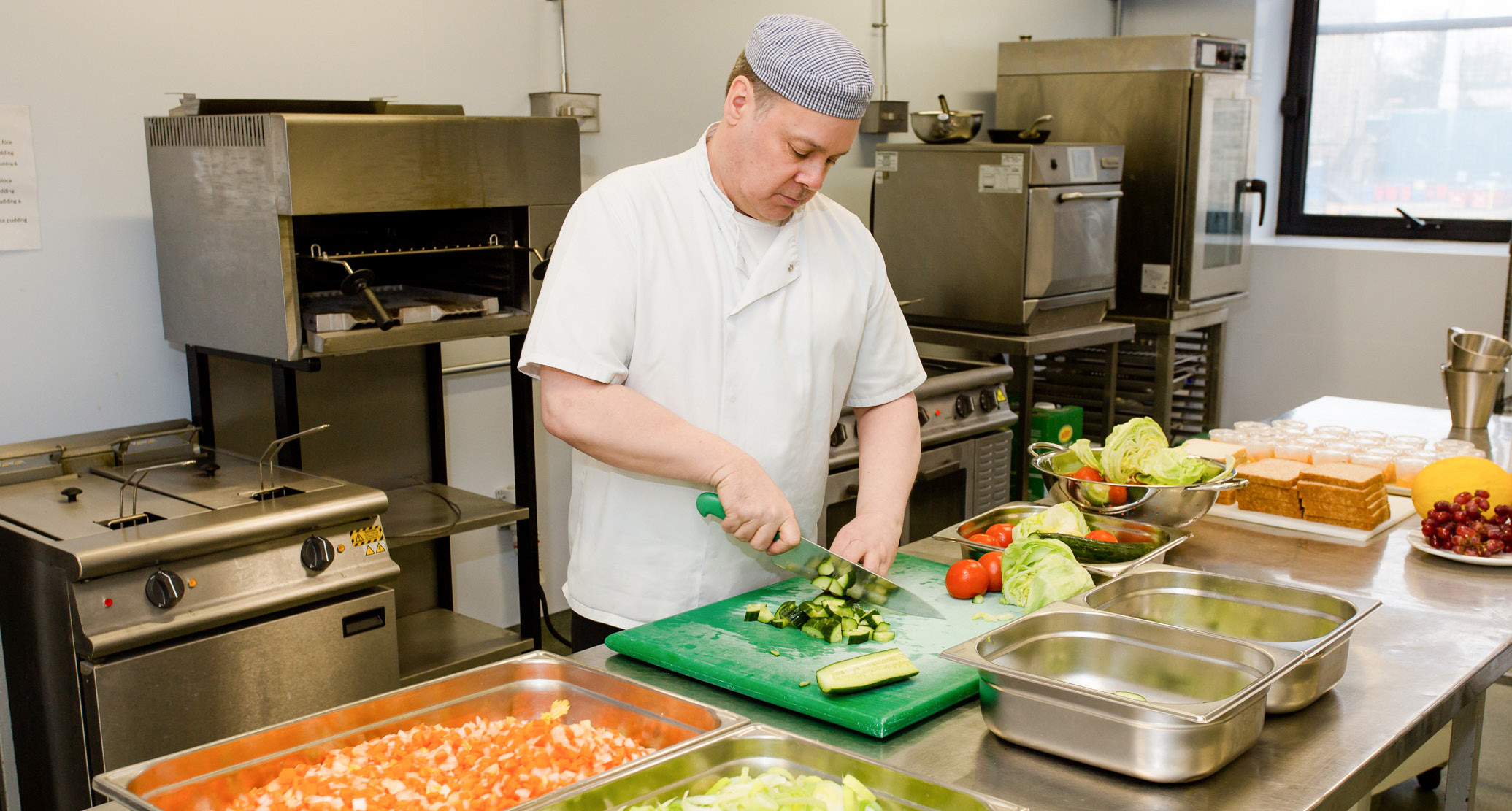
The eight national standards that all NHS organisations are required to meet are:
- 1. Organisations must have a designated board director responsible for food (nutrition and safety) and report on compliance with the healthcare food and drink standards at board level as a standing agenda item.
- 2. Organisations must have a food and drink strategy.
- 3. Organisations must consider the level of input from a named food service dietitian to ensure choices are appropriate.
- 4. Organisations must nominate a food safety specialist.
- 5. Organisations must invest in a high calibre workforce, improved staffing and recognise the complex knowledge and skills required by chefs and food service teams in the provision of safe food and drink services.
- 6. Organisations must be able to demonstrate that they have an established training matrix and a learning and development programme for all staff involved in healthcare food and drink services.
- 7. Organisations must monitor, manage and actively reduce their food waste from production waste, plate waste and unserved meals.
- 8. NHS Organisations must be able to demonstrate that they have suitable 24/7 food service provision, which is appropriate for their demographic.
This strategy covers all of our premises including Bradford Royal Infirmary, St Luke’s Hospital, and our Community Hospitals; Eccleshill Community Hospital, Westbourne Green and Westwood Park and applies to both adults and children inpatients.
Key achievements since our last food and drink strategy
Our first Food and Drink Strategy launched in 2017 provided a framework for five years of significant improvement in relation to nutrition and hydration for our patients, staff and visitors.
Retail, staff and visitor food and drink
- Outsourced retail catering with price promotions on healthy items and advertised healthy food options.
- Baseline assessment completed against to assess the CQUIN compliance of retail units.
- Continued monitoring of the Trust retail partner via quarterly contract meetings and annual hygiene inspections.
- New staff rest rooms opened in the Bradford Royal Infirmary and St Luke’s Hospital sites with facilities for staff to store and prepare food.
Sustainable procurement and food waste
- Government Buying Standards are used to build all specifications for food contracts. These are best practice guidelines to follow when the Trust is tendering for suppliers to provide food and drink.
- Initiatives in place to reduce wasted meals at ward level.
- Waste food digesters at BRI and SLH sites removed and replaced with a waste food collection service to create renewable energy and bio-fertiliser.
Patient food and drink
- Introduced ward diet and catering folders to improve patient access to information about patient catering e.g. special diets, menus available and out of hours food provision.
- Introduction of supplementary snacks for patients requiring additional calories and nutritional support. Patients whose needs cannot be met by the standard or supplementary menus are catered for by our qualified diet chefs.
- Provision of a coded menu including choices for a range of specialised diets including; adult and children’s menus, vegetarian and halal choices, Kosher and Afro-Caribbean meals and gluten free ranges.
Key elements of our Food and Drink Strategy
Expand each aim to see the work planned during the strategy period.
Have a designated board director responsible for food (nutrition and safety). They will report on the Trust’s compliance with the healthcare food and drink standards at board level.
Multi-disciplinary Nutritional Steering Group to provide an annual report to the Chief Nurse via the Quality and Patient Safety Academy on the progress of implementing the eight food standards.
Have a Food and Drink Strategy to improve nutrition and hydration for patients, staff and visitors.
Ensure that the strategy is a live document with relevant action plans to monitor implementation and progress of the food and drink standards.
Introduce a Catering and Nutrition Improvement Dietitian to promote improvement through food and nutrition meeting the needs of patients, staff and visitors.
The Catering team to work closely with the Catering and Nutrition Improvement Dietitian to support the inpatient catering provision. This will include menu analysis and development.
Have a nominated food safety specialist to ensure the Trust meets their legal obligations as a food provider.
Ensure the Trust has a named Responsible Person, a Competent Person and Person responsible for food and drink.
Ensure there are correct levels of staff to support the delivery of healthcare food and drink services.
Regularly review and undertake service improvement work to establish that correct resource is in place to support the implementation of the healthcare food and drink standards.
Undertake a training needs analysis with clear actions to ensure all staff are practising safely and trained appropriately for their role.
Ensure all Trust staff involved in healthcare food and drink have the appropriate skills, knowledge and competencies to deliver safe nutritional care.
Develop education packages to make sure all staff are supported in developing understanding of the importance of nutrition and hydration and can translate into practice.
Patient food and drink
Patients’ nutritional safety is imperative, and all Trust colleagues involved in patient care must understand their accountability for this.
According to the British Association of Parenteral and Enteral Nutrition (BAPEN) in 2023, national estimates suggest that approximately 45% of adult patients admitted to hospitals in the UK are at risk of malnutrition. Malnutrition is a serious condition that can occur when a person’s diet does not contain the correct amount of nutrients or is caused by not having enough to eat. Malnourished patients have increased length of stays, more complications and the associated costs are two to three times higher than a non-malnourished patient. Patients in care settings must be routinely screened; identifying a person’s nutrition, allergen and assisted feeding and drinking needs is essential to safeguarding patients.
The Nutrition and Hydration Digest states that menus must be capable of providing the energy and protein requirements for both nutritionally well and nutritionally vulnerable adult patients, evidenced by a menu capacity analysis. Menu design and planning, dietary coding and defined and executed policies are the key to ensuring patient nutritional safety.
Standard and specialist menus should be planned jointly by food service dietitians and caterers. Dietary coding must be undertaken by a registered dietitian who is qualified to review nutrition, allergen and ingredient data and decide on accurate and safe codes.
Expand each aim to see the work planned during the strategy period.
Develop and put in place a nutrition and hydration quality improvement programme that reviews nutrition and hydration in relation to quality, safety, patient experience and clinical effectiveness.
Continually reassess compliance with the 10 key characteristics of good nutrition and hydration care and the British Dietetic Association’s Nutrition and Hydration Digest and develop a live action plan.
Make sure that ward assurance programmes assess compliance with hospital food standards and are reported annually as a minimum.
Use digital pathways to support the delivery of nutrition and hydration care.
Procure and implement an inpatient electronic meal ordering system to enable patients to view meal ingredients, allergens and nutritional information for each menu dish. This will also support the reduction of food waste.
Provide comprehensive nutrition and hydration support for all patients, prioritising those at greater nutritional risk.
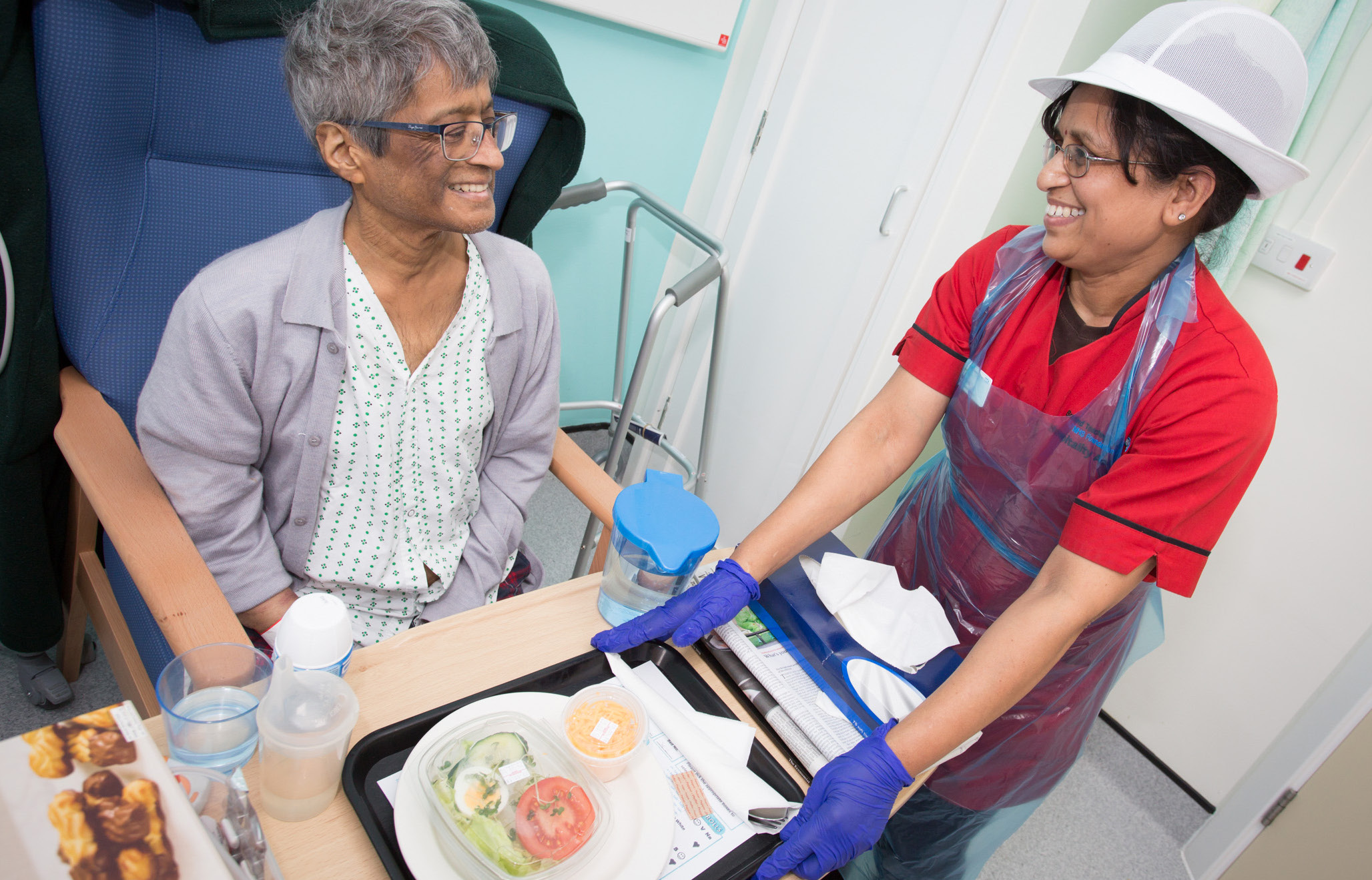
Make sure all patients have access to nutritional meals, snacks and drinks to meet their individual needs.
Refer patients to the dietitian team and the Catering Diet Chefs if the standard menus are not sufficient for nutritional need.
Monitor dehydration risk and encourage regular hydration for all patients.
Trust to implement a hydration menu with input from ward-based clinicians, dietitians, infection prevention and catering teams.
Work in partnership with patients to ensure their nutritional needs are met.
Make sure a range of menus are available to meet clinical, cultural and religious requirements.
Look to give patients a range of opportunities to provide comments, suggestions and feedback on food and drink provision.
Develop action plans and learning from patient surveys and audits to make continual improvements.
Make sure patients are provided with appropriate support at mealtimes.
Make sure meals are provided in accordance with the Trust’s protected mealtimes policy.
Ward and catering staff to work together to provide an environment conducive to eating and drinking.
Patients to be given appropriate support with eating and drinking to maximise nutritional and hydration
intake.
Retail, staff and visitor food and drink
Expand each aim to see the work planned during the strategy period.
To provide high quality, food and drink across all settings in the Trust, to enable staff and visitors to have a healthy food experience that meets their dietary needs.
Continually review food and drink choices to make sure they comply with National Standards recommendations.
Implement the Government Buying Standards Framework nutrition standards. This standard provides a framework by which organisations can make sure healthier options are available to help staff and visitors meet dietary recommendations and includes both mandatory and best practice.
Continue to meet the CQUIN (Commissioning for Quality and Innovation) related standards. This ensures continued compliance around advertising, promotions and placement of high fat and sugary foods and access to healthier options.
Ensure robust monitoring of retail and vending contracts.
Ensure the Trust is compliant with ‘Natasha’s Law’ – this is to provide allergy sufferers with confidence that the food they consume is correctly coded with allergen information.
Make sure all staff and visitors have access to suitable food and drink out of hours to support their nutrition and hydration needs including drinking water.
Tender for a healthier vending provision, including hot vending machines, for staff working non-standard shifts.
Sustainable procurement and food waste
Our aim is to build on work already undertaken to reduce plastic waste and enable lower carbon food choices. By reducing carbon emissions and improving the sustainability of our supply chains, we will help to achieve the aims of delivering a ‘net zero’ NHS.
Expand each aim to see the work planned during the strategy period.
Assess Trust food and drink provision against the Government Buying Standards and the DEFRA balanced scorecard.
Continually monitor our food and drink services against the mandatory and best practice government buying standards.
Significantly reduce food waste at ward level.
Collect more detailed data at ward level to reduce food waste at plate level.
Review menu and digital menu ordering options.
Implementation and monitoring
Implementation of the strategy will be through the development of an action plan and monitored though the multidisciplinary Nutrition Steering Group which reports via the Patients Experience Group into the Patient Safety Group. An accompanying action plan will be used to develop this strategy.
It is expected during the life of this strategy additional issues and improvements may arise and therefore the action plan will be reviewed and amended to reflect any changes as required. Relevant stakeholders, such as inpatients with specific dietary needs, will be identified and invited to provide feedback on the work to be progressed to meet the healthcare standards.
There are several ways in which the Trust will be monitored on delivering these standards, one of which is the annual Patient-Led Assessments of the Care Environment (PLACE) organised by the Health and Social Care Information Centre. NHS England will monitor progress through data collections including the Estates Returns Information Collection (ERIC) and Premises Assurance Model (PAM). Organisations will be expected to report annually on their level of compliance for each section of the standards and provide evidence.

Supporting information
Download: Food and Drink Strategy (PDF)
©
2026 Bradford Teaching Hospitals NHS Foundation Trust